Table of Contents
Key Takeaways
- The best strategy game is one that a child enjoys enough to play again.
- Age recommendations are useful, but attention span, reading ability, and comfort with rules matter too.
- Different game mechanics can encourage planning, logic, spatial reasoning, memory, and communication.
- Short games and simple setups often make a stronger first impression for younger players.
- Adults can encourage learning by asking questions instead of directing every move.
Choosing a strategy game for a child is less about finding the most complicated box on the shelf and more about finding a challenge that feels inviting. The right game gives children meaningful choices, lets them see the results of those choices, and creates a reason to think differently next time.
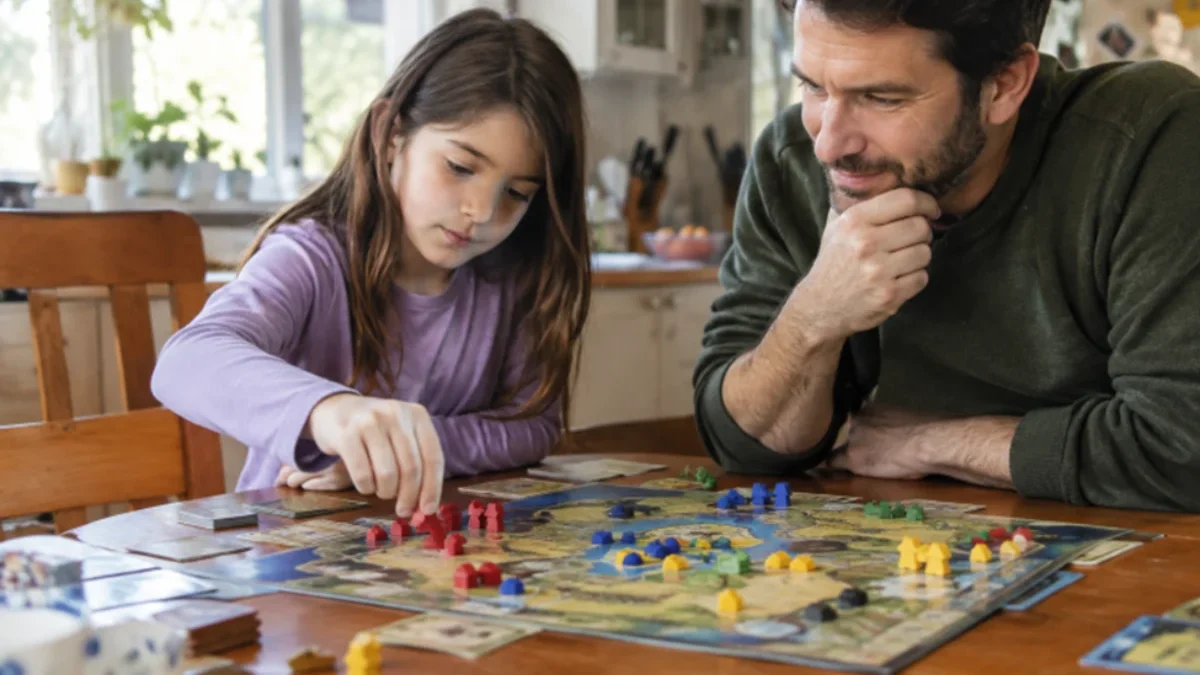
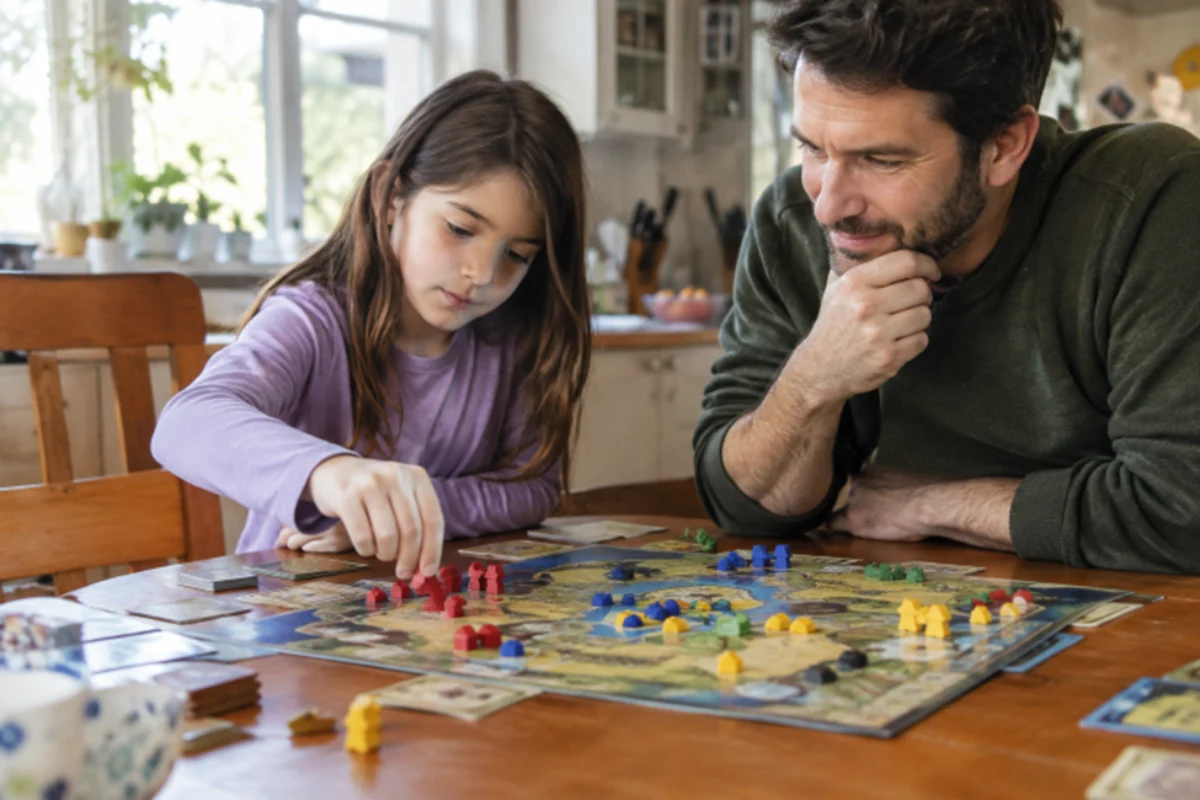
Families looking for playful ways to encourage planning and problem-solving can explore strategy board games that build critical thinking skills. A well-matched game can turn an ordinary afternoon into practice with patience, flexible thinking, and decision-making, without making play feel like schoolwork.
Why Strategy Games Work
Strategy games make thinking visible. A player chooses a route, places a tile, saves a resource, or takes a risk, then sees how that choice affects the next turn. That immediate feedback can help children connect actions with outcomes while they are engaged in a shared activity.
Play also gives children room to practice social and cognitive skills in a lower-pressure setting. Guidance on supporting children’s learning through play notes that structured activities, such as board games, can help children follow rules, solve problems, communicate, and cooperate. The goal is not to turn every game into a lesson. It is to choose a level of challenge that feels achievable and satisfying.
Match the Game to the Child
Start with the child rather than the game category. A child who loves building may enjoy arranging pieces into a system, while a child drawn to mysteries may prefer clues, hidden information, and deduction. Children who like numbers might enjoy calculating options, but children who dislike math-heavy activities may respond better to visual patterns or storytelling.
Consider age, attention span, reading ability, preferred play time, and comfort with competition. Also, think about whether the child can follow a sequence of steps without becoming frustrated. A game that takes five minutes to explain and fifteen minutes to play may be a better fit than a more advanced game that requires a long setup and constant reminders.
Skills to Look For
Strategy games can emphasize different kinds of thinking. Look at the actual choices players make, not just the educational language on the package.
- Planning: Thinking ahead and preparing for the likely next moves.
- Logic: Using rules, clues, and patterns to make a sound choice.
- Decision-making: Comparing options before acting.
- Memory: Remembering locations, cards, rules, or earlier moves.
- Spatial reasoning: Understanding position, direction, shapes, and movement.
- Probability: Weighing risk when chance affects the outcome.
- Communication: Explaining ideas and listening to teammates.
- Self-control: Waiting for turns and recovering from setbacks.
Game Mechanics and What They Teach
Game mechanics are the repeated actions that shape play. Grid boards, tiles, and movement pieces can invite spatial thinking. Pattern matching can support visual logic. Collecting limited resources creates trade-offs, because taking one option may mean giving up another.
Dice and card draws add chance, which can help children discuss risk without assuming they can control every outcome. Hidden cards or concealed locations may encourage memory and deduction. Building systems, such as routes, towers, or combinations of both, can show how small steps create larger results.
Cooperative, Competitive, and Solo Play
No single format works best for every child. Cooperative games ask players to solve a shared problem, making them useful for practicing discussion, turn-taking, and group planning. They can be especially welcoming when a child is still learning how to handle losing.
Competitive games give children a chance to make independent decisions, celebrate improvement, and practice good sportsmanship. Solo games can support quiet focus and self-correction, while team games combine personal responsibility with communication. Match the format to the child’s current needs, not just to adult preferences.
Age, Reading Level, and Complexity
Treat the age on the box as a starting point. A younger child who is patient and familiar with game routines may be ready for more, while an older child may prefer a simpler game with a faster pace. Look for visual reminders, clear symbols, and short rounds when reading skills are still developing.
Games with adjustable rules can work well for siblings or mixed-age groups. Begin with the core objective and a smaller set of choices, then add advanced rules after everyone understands the basics. Avoid assuming that a longer rulebook means a better learning experience.
How Adults Can Support Play
- Play a practice round and explain choices out loud.
- Ask, “What do you think could happen next?”
- Invite the child to explain why a move seems useful.
- Pause before offering help, so the child has time to think.
- Praise effort, reflection, and fair play instead of focusing only on winning.
- Afterward, discuss one interesting decision or surprising outcome.
Choosing for Different Learning Needs
Accessible game time often comes from small adjustments. Choose uncluttered boards, high-contrast symbols, and pieces that are easy to hold when those features would help. Reduce the number of rules during early rounds, allow extra thinking time, and choose predictable formats for children who prefer clear routines.
Quiet solo or cooperative options may suit children who find busy group play tiring. The important question is whether the child can participate comfortably and make real choices, not whether every player uses the exact same approach.
Common Mistakes and a Simple Buying Checklist
Common mistakes include choosing a game only because an adult enjoys it, overlooking setup time, or treating an educational label as proof that a child will enjoy the experience. Fun and repeated play matter because children get more opportunities to practice when they want to return to a game.
Before You Choose
- Does it fit the child’s reading level and attention span?
- Can the main rules be explained in a few minutes?
- Does it offer the type of thinking the child enjoys or needs to practice?
- Does it work for the number of available players?
- Are the pieces easy to see, hold, sort, and use?
- Can the rules be simplified now and expanded later?
- Will the child likely want another round?
Final Thoughts
The strongest choice is not always the hardest game. A good strategy game offers clear choices, fair challenges, and a reason to try again. When the game suits the child’s interests and current abilities, play can build useful habits while staying relaxed, social, and fun.
Also read: How Telehealth Has Changed the Career Ceiling for Nurses