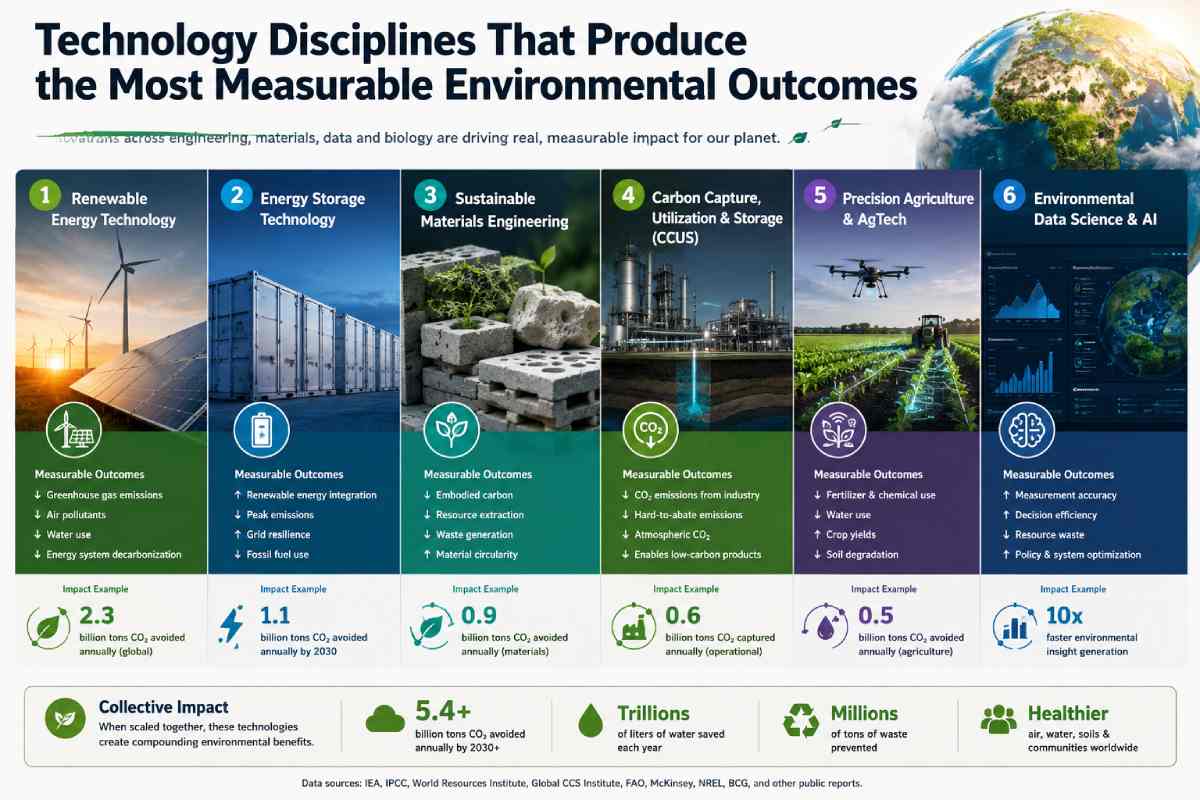
Technology has created a complicated environmental challenge. The sector consumes significant energy and resources, but it also provides many of the tools needed to reduce emissions, improve efficiency, and monitor ecological change.
Technology careers creating the strongest environmental outcomes are the ones where impact can be measured. These professionals build systems that connect technical decisions to specific results, such as lower emissions, reduced waste, and improved resource management.
This article examines how these disciplines create environmental impact and what skills technology professionals need to succeed in these growing career areas.
Table of Contents
Why Measurability Matters for Environmental Technology Careers
Environmental technology careers increasingly depend on separating real impact from sustainability claims. Companies have invested heavily in carbon reduction plans, sustainable products, and ESG initiatives, but the quality of those efforts varies widely.
Technology professionals who understand environmental measurement provide valuable expertise. They can identify whether sustainability improvements are producing meaningful results or simply creating better marketing language.
This distinction matters because environmental performance requires evidence. Organizations need systems that measure emissions, track resource use, and verify improvements over time.
Regulatory pressure is also making environmental measurement a technical requirement. Climate reporting standards, including the SEC climate disclosure rules and the European Union’s Corporate Sustainability Reporting Directive, are increasing demand for accurate environmental data systems.
Scope 1, Scope 2, and Scope 3 emissions reporting requires reliable technology infrastructure. Professionals who can build, manage, and audit these systems are becoming increasingly important across industries.
Supply Chain Technology: Where Environmental Impact Is Hiding
Supply chain management careers play a significant role in influencing global environmental health. For many companies, emissions from suppliers, manufacturing, transportation, and product disposal account for the majority of their total footprint.
These indirect emissions are often categorized as Scope 3 emissions. They are difficult to measure because they involve complex networks of suppliers, materials, logistics providers, and customer behavior.
Technology systems provide the foundation for improving supply chain sustainability. Procurement platforms, logistics software, supplier management tools, and forecasting systems determine how effectively companies can identify and reduce environmental impacts.
Supply chain technology professionals create measurable improvements through several applications. Carbon tracking platforms help organizations connect emissions data to specific suppliers and operational activities.
Logistics optimization systems reduce transportation emissions through improved routing, shipment planning, and transportation choices. Supplier sustainability platforms make environmental performance part of purchasing decisions.
Circular economy technology also plays an important role. These systems track materials throughout their lifecycle and help companies reduce waste through reuse, recycling, and improved product design.
Demand forecasting technology creates additional environmental benefits. Better predictions reduce overproduction, unnecessary inventory, and wasted resources.
The strongest supply chain sustainability professionals combine technical skills with environmental knowledge. They understand enterprise systems, data integration, logistics platforms, carbon accounting, and life cycle assessment.
This combination is valuable because organizations need professionals who can translate technical improvements into measurable environmental outcomes.
Environmental Data Science and Remote Sensing
Environmental data science uses advanced technology to understand environmental systems at large scales. Professionals in this field apply machine learning, remote sensing, geospatial analysis, and data processing to environmental challenges.
Many ecological problems are too large or complex for traditional monitoring methods alone. Satellite imagery and automated data systems allow organizations to track environmental changes across massive geographic areas.
Remote sensing technology helps monitor deforestation, land changes, and ecosystem disruption. Satellite-based systems can provide frequent updates on environmental conditions that would otherwise require extensive field measurement.
Machine learning models are also helping predict wildfire risks, analyze climate patterns, and identify environmental threats. These tools allow researchers and organizations to make decisions using large volumes of environmental data.
The technical skills in this field are highly specialized. Professionals need experience with satellite data, GIS platforms, environmental modeling, and data visualization.
Time-series analysis is another important capability. Environmental systems change constantly, and understanding those patterns helps identify long-term trends.
The most effective environmental data scientists understand both technology and the ecological systems they study. Technical models become more accurate when professionals understand the environmental context behind the data.
Environmental data science is most valuable when technical expertise and environmental knowledge work together.
Clean Energy Systems Technology
Clean energy technology provides one of the clearest connections between technical work and measurable environmental outcomes. Engineers, developers, and data professionals in this field build the systems supporting the transition toward lower-emission energy.
Solar power, wind energy, battery storage, smart grids, and energy management platforms all rely on advanced technology. The environmental results can be measured through clean energy generation, emissions avoided, and improvements in energy efficiency.
Software has become central to modern energy systems. Renewable energy sources create complex management challenges because of production changes based on weather conditions and demand.
Grid management platforms help balance energy supply and consumption. Energy storage systems improve battery performance while supporting grid stability.
Demand response technology reduces energy use during peak periods. This lowers pressure on the grid and can reduce emissions associated with high-demand energy production.
Digital twin systems also support clean energy development. These models allow operators to simulate energy systems and test improvements before changing physical infrastructure.
Technology professionals in clean energy work on systems where environmental impact is directly measured. A software improvement or optimization strategy can often be connected to specific energy savings or emissions reductions.
For professionals who want technical work with clear environmental accountability, clean energy systems represent one of the strongest career paths available.
Environmental Consulting: Where Technical Knowledge Meets Regulatory Reality
Environmental consulting applies technical knowledge to real-world environmental decisions. Consultants help organizations evaluate risks, meet regulations, and reduce environmental impacts.
The work includes environmental assessments, compliance reviews, remediation planning, sustainability strategies, and environmental due diligence.
Environmental consultants support businesses, governments, and development projects. Their work helps organizations understand environmental requirements before making major operational decisions.
Technology skills are becoming increasingly important in this field. GIS tools help consultants analyze environmental conditions across locations.
Data analysis and visualization improve environmental reporting. Life cycle assessment tools help evaluate the environmental footprint of products and processes.
Climate risk modeling supports organizational planning. IoT sensors also allow continuous monitoring of environmental conditions.
Professionals who combine environmental knowledge with technology skills can provide more advanced solutions. They can analyze larger datasets, automate monitoring processes, and create stronger recommendations.
Environmental consultant salary expectations can vary by market but generally start at around $65,000 per year.
Careers often begin with data collection, analysis, and reporting. Advancement can lead to project management, client leadership, and strategic advisory positions.
Technology professionals may advance quickly because environmental organizations increasingly need stronger digital capabilities.
What These Careers Have in Common
The strongest environmental technology professionals share a common skill set. They understand both the technology they build and the environmental problem they are solving.
A supply chain professional needs to understand emissions measurement. An environmental data scientist needs ecological knowledge. A clean energy specialist needs energy system expertise.
Technical ability alone does not guarantee environmental impact. Professionals need domain knowledge to create solutions that address real environmental challenges.
Measurement and attribution are also critical skills. Environmental improvements must be connected to specific actions and verified through reliable data.
Professionals who build measurement systems help organizations understand what has changed and why it changed. They can distinguish genuine progress from unsupported claims.
This ability supports regulatory compliance, investor reporting, and long-term sustainability planning.
Conclusion
The technology disciplines producing the most measurable environmental outcomes are those where technical work connects directly to quantifiable results. Supply chain technology, environmental data science, clean energy systems, and environmental consulting all provide clear paths for professionals who want their work tied to sustainability progress.
These careers require more than technical expertise. The strongest practitioners combine technology skills with environmental understanding and measurement capabilities.
Demand for professionals with this combination continues to grow. Companies increasingly need people who can build systems, analyze environmental data, and prove that sustainability efforts create real results.
Technology professionals who develop expertise at the intersection of technology and sustainability are positioned to contribute to one of the most important challenges facing modern industries.
Also Read: Why High-Quality Training Data Is the Real Bottleneck in Modern AI Systems