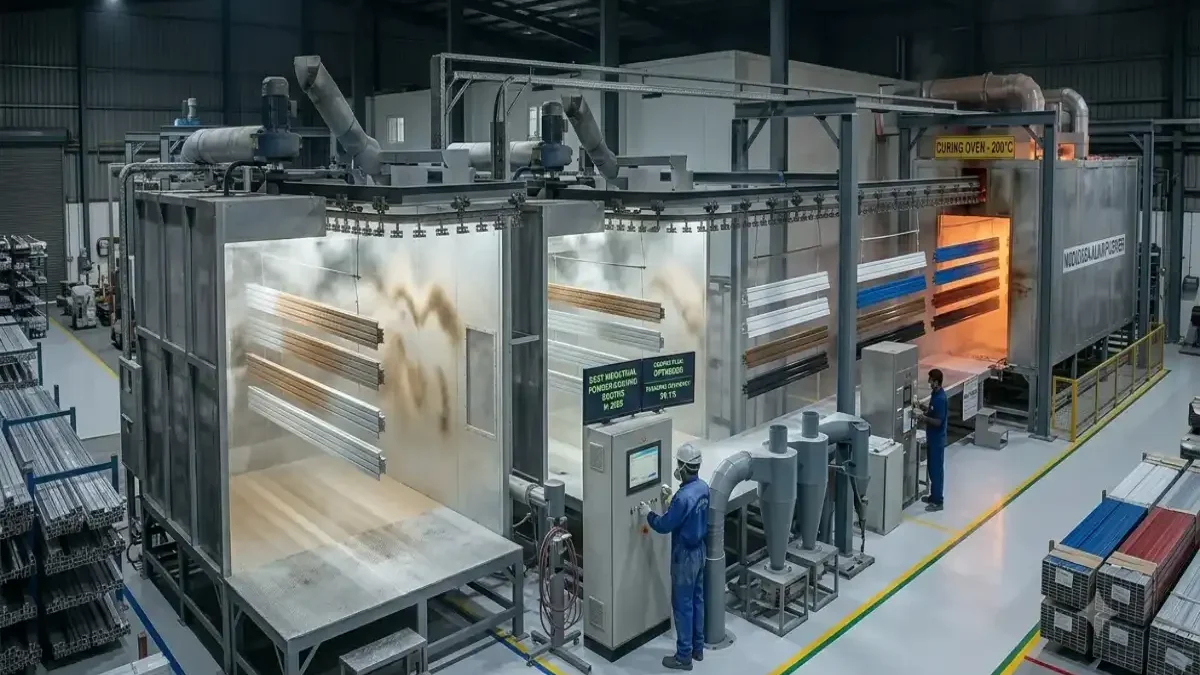
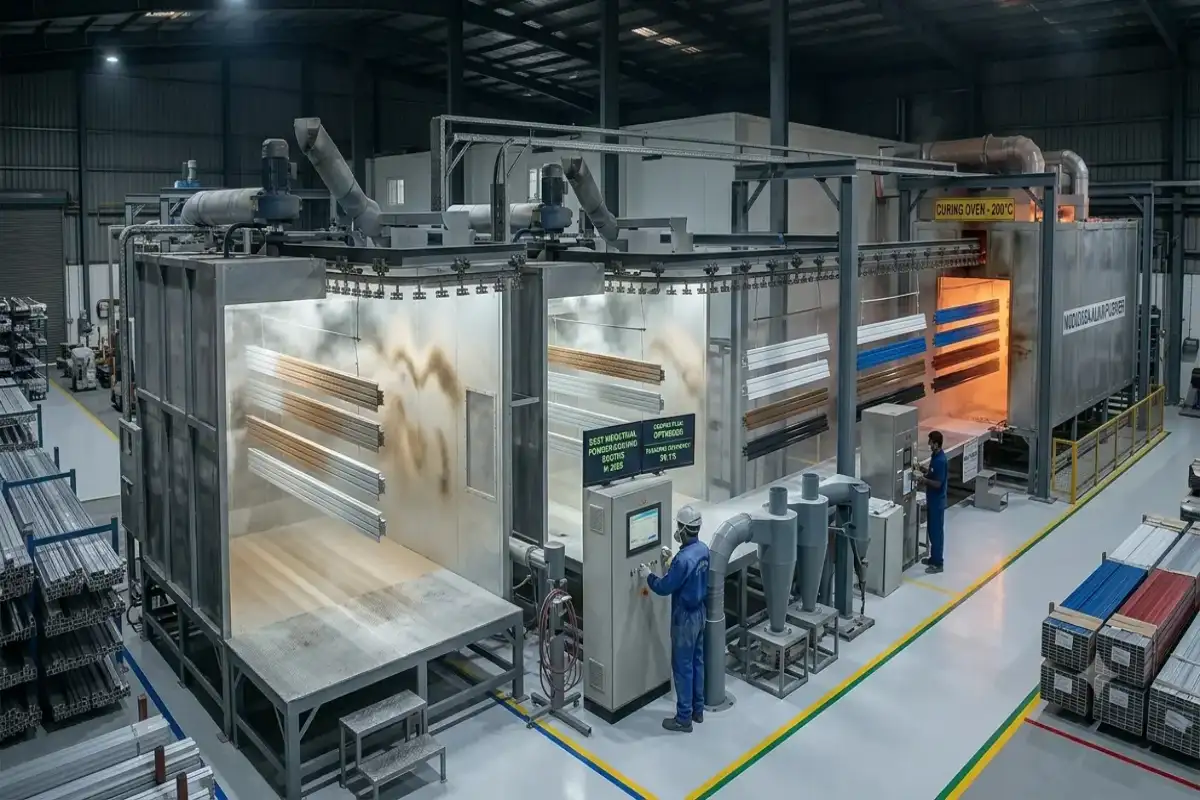
Long fabrications create curing problems that standard box-shaped parts never expose. Selecting the right oven means looking at door clearance, rack movement, airflow, heat demand, and the way operators will physically load the work. Geometry matters because a part can fit inside the chamber and still be difficult to handle, heat evenly, or remove without disrupting production.
Table of Contents
Start With Usable Chamber Space, Not Exterior Dimensions
Overall oven dimensions tell buyers very little about how much working room remains once doors, wall thickness, ducting, and internal airflow features are considered. Clearance around the part should allow heated air to move along long rails, frames, pipe assemblies, and fabricated structures instead of trapping sections against walls or neighboring loads. Measuring the rack or cart along with the workpiece prevents a common sizing mistake in which the product fits but its handling equipment does not. Buyers reviewing a Reliant industrial powder coating oven should therefore base chamber size on the complete loaded footprint rather than the bare part alone.
How Will the Part Enter, Turn, and Leave the Oven?
Handling becomes more complicated as parts grow longer, wider, or less balanced. Carts need enough aisle space to approach the door straight, while floor tracks can help guide heavy loads without forcing employees to repeatedly correct their direction.
Turning radius deserves attention outside the chamber as well. A long fabricated frame may pass through a wide opening yet still be impossible to align if machinery, columns, or walls leave too little room in front of the oven.
Overhead handling can solve a different set of problems for parts that are difficult to support from below. Split-top arrangements, monorails, or suspended carriers may allow awkward assemblies to travel through Reliant powder coating systems without being lifted off one fixture and placed onto another between stages.
Unusual shapes also affect how operators position components during coating and cure. Planning a Reliant powder coating equipment package around the same carts, hooks, or carriers used throughout production can reduce unnecessary handling and protect freshly applied powder from contact damage.
Airflow Has to Reach the Full Length of the Load
Airflow becomes increasingly important as chamber length increases because the oven must move heat around the entire assembly rather than simply maintain a warm average temperature. Long parts can create sheltered areas where crossmembers, boxed sections, or dense fabrication block circulation, causing one end or interior section to warm more slowly than exposed surfaces. Racking should leave enough open space for supply and return air to travel around the load instead of creating a wall of metal inside the chamber. Configured correctly, Reliant powder coating ovens can give businesses the circulation needed to cure extended fabrications more consistently from one end to the other.
Heavy Sections Can Turn a Large Part Into a Large Thermal Load
Thermal mass often matters more than physical length once thick plate, cast sections, or reinforced weldments enter the oven. Heavy areas absorb considerably more energy than thin sheet, so the largest-looking section is not always the portion that determines the cure cycle.
Mixed construction adds another variable because one assembly may combine tubing, plate, sheet metal, and thick connection points. Temperature profiling helps identify which section heats slowest, giving operators a more reliable basis for setting dwell time and using powder coating equipment efficiently than the oven-air reading alone.
Recovery performance deserves close attention when operators repeatedly load large, cold assemblies. Doors may stay open longer while carts are positioned, allowing more heat to escape before the next cycle begins.
Burner capacity, insulation, circulation, and chamber volume all affect how quickly useful curing conditions return. Evaluating a Reliant powder coating oven for sale around expected batch weight and door-open time can help a manufacturer avoid equipment that fits the product physically but struggles to recover fast enough for the required production schedule.
Part Orientation Can Change the Oven Size You Actually Need
Orientation sometimes allows an awkward component to fit into a smaller or more efficient layout. Tall narrow products may benefit from vertical clearance, while long structural pieces usually require horizontal chamber length and enough room for carts or suspended carriers. Horizontal loading can also simplify support for flexible or heavy assemblies that might distort if hung incorrectly. Proper orientation lets powder coating equipment serve the actual geometry of the product instead of forcing operators into difficult loading methods simply because the chamber dimensions looked sufficient on paper.
Facility Space and Utilities Still Set the Practical Limits
Footprint planning should include more than the oven body because long parts require staging space before and after curing. Existing aisles may need enough room for carts, tow equipment, cooling racks, inspection, and maintenance without blocking fabrication traffic elsewhere in the plant.
Access around doors and service areas becomes especially important with oversized equipment. Poor placement can make burner service, fan maintenance, seal replacement, or routine inspections far harder than they need to be.
Utility demand rises along with chamber volume and thermal load. Gas supply must support the burner system, while electrical service has to handle circulation fans, controls, and related equipment.
Facility planning should also account for exhaust requirements and the physical route used to bring large oven sections into the building. Reliant powder coating equipment can fit more smoothly into an expansion project when utilities, rigging access, foundation needs, and final equipment placement are checked before manufacturing and delivery.
Verify the Cure Process With the Actual Production Parts
Commissioning should use representative long and awkward parts rather than an easy test load that tells little about normal production. Temperature probes placed at heavy joints, distant ends, sheltered surfaces, and thinner sections can show whether the chamber heats the entire assembly within the required cure window. Production teams can then establish loading patterns and recipes based on measured behavior instead of adding extra oven time to every job as insurance. Reliant Finishing Systems offers oven products and equipment packages that can be considered around these difficult loads, giving manufacturers a way to select chamber proportions, heating capacity, doors, airflow, and handling provisions specifically for parts that standard batch equipment may struggle to accommodate.
Also read: How to Build Trustworthy AI Research Workflows for Complex Questions